THREAT HUNTING
The Hunt That Starts Before the Alert Fires
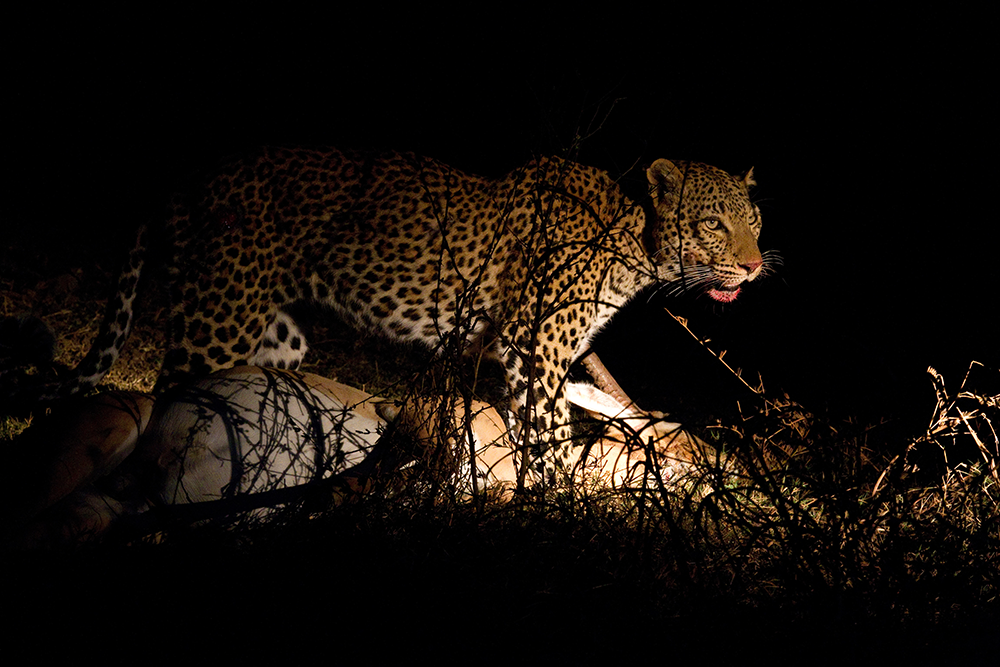
The leopard does not wait at the watering hole hoping prey will wander past. It studies the environment — the trails the prey uses, the times it moves, the routes it takes between cover and water. It positions itself ahead of the prey’s path, settles into stillness, and waits for the moment the prey walks into the engagement the leopard has already planned. The kill is not reactive. It is the conclusion of a hypothesis the leopard formed long before the prey arrived.
Stop Searching. Start Stalking.
See Exactly Where Your Detection Coverage Ends
Every True Positive Closes a Detection Gap Forever
BUILT FOR THE HUNTER THAT NEVER WAITS
Hunt first. Detect everything. PROWL makes it structural.
Stalk. Strike. Close the gap.
EXCLUSIVE
Most Threat Hunting Programs Are Not Hunting. They Are Hoping.
There is a meaningful distinction between threat hunting and threat searching — and most organizations that believe they have a threat hunting program are actually running the second one.
Threat searching is what happens when an analyst opens a query tool and starts exploring the environment looking for something that feels wrong. There is no documented hypothesis. There is no structured methodology. There is no defined data source, no predicted behavioral indicator, and no plan for what to do with the result when the search produces something interesting. The analyst covers ground. They may find something. They may not. When the search ends, the documentation of what was looked at and what was ruled out exists only in the analyst’s memory — which means the next analyst who hunts the same territory starts from zero and the hunting program makes no cumulative progress.
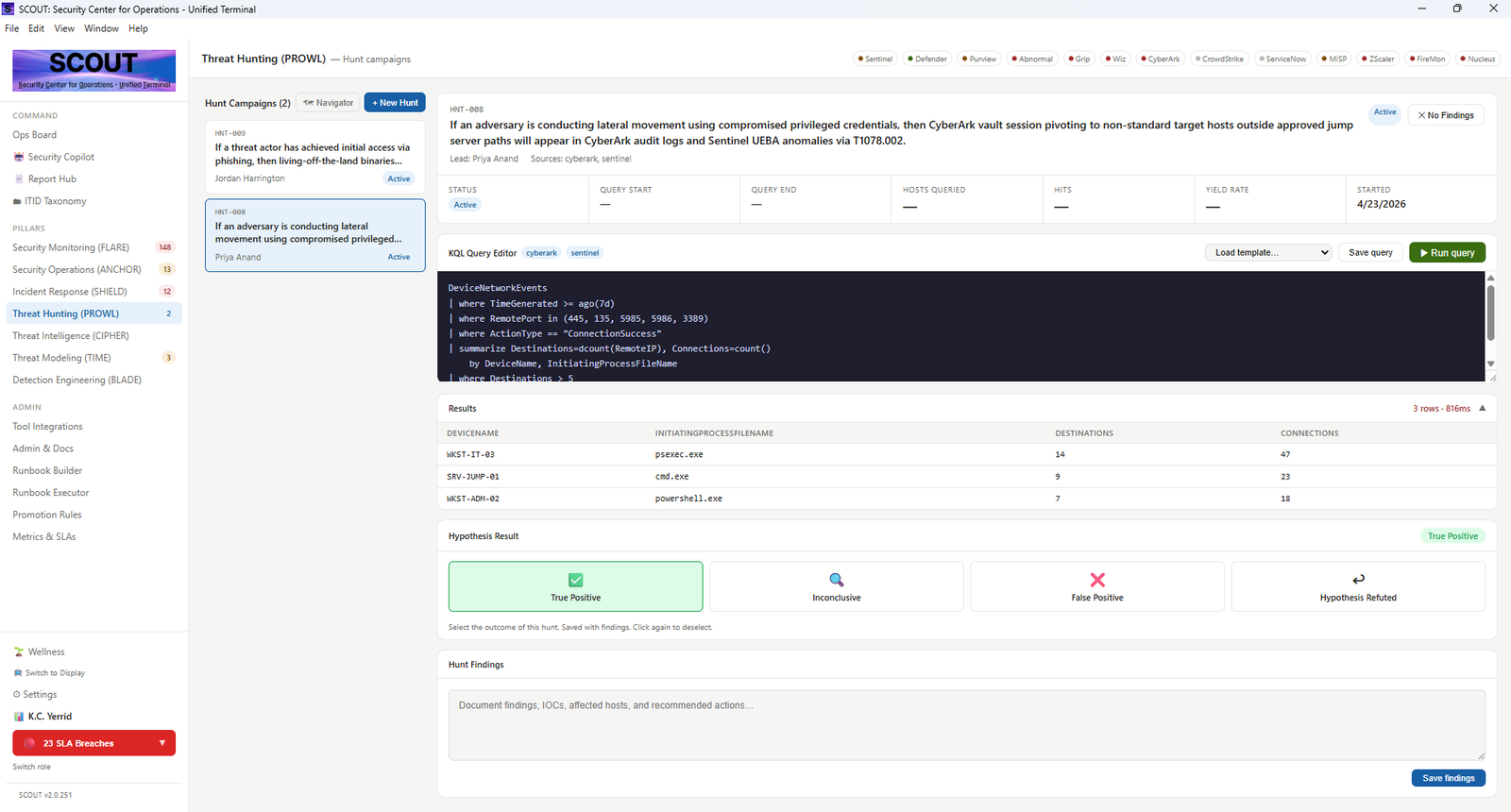
Threat hunting is different in every structural dimension. It begins with a hypothesis — a documented, intelligence-grounded statement of what the analyst believes is present in the environment and why. The hypothesis defines the prey before the hunt begins. It specifies the behavioral indicators that would confirm the prey is present, the data sources that would surface those indicators, and the queries that would execute the search with precision rather than intuition. The hunt runs against a defined methodology. Every observation is documented. Every decision point is recorded. Every result — positive, negative, or inconclusive — contributes to the institutional knowledge of the hunting program.
Most organizations know this distinction exists. Most of them are still running the search rather than the hunt — not because their analysts lack the skill to hunt properly, but because they lack the platform that makes structured hunting the path of least resistance rather than an additional documentation burden on top of an already demanding workload.
PROWL removes that barrier entirely.
A CLOSER LOOK
The Lion Surveys Before It Descends
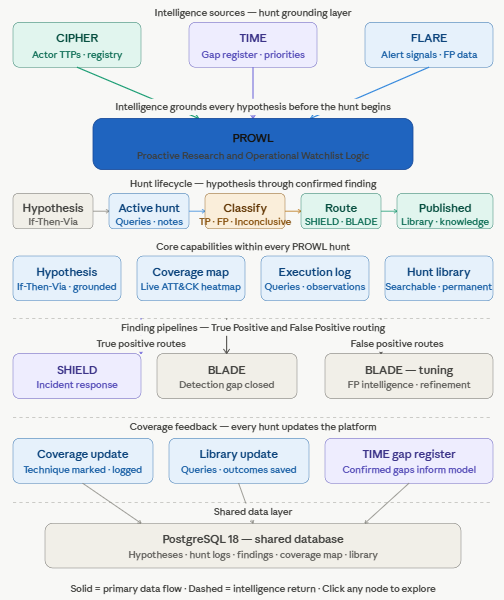
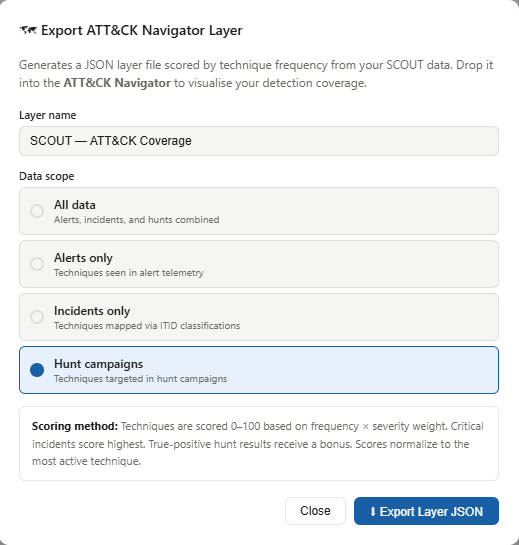
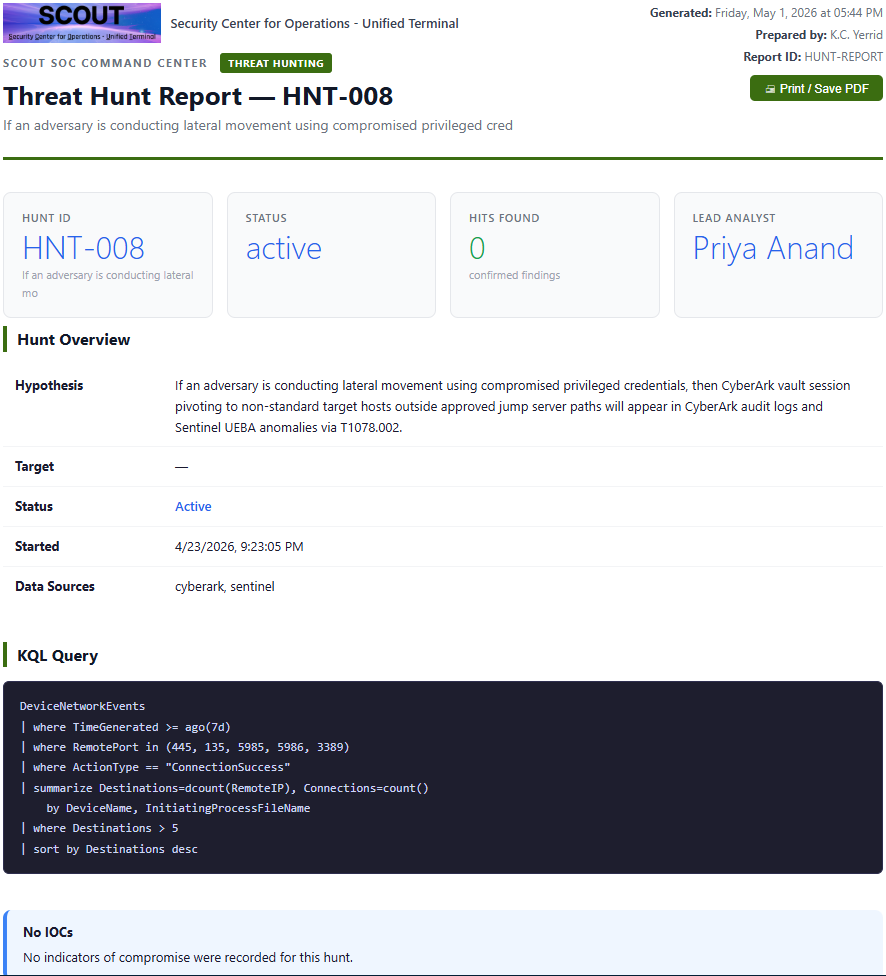
A lion surveying the savannah from elevation sees what the prey on the ground cannot — the full extent of the territory, the patterns of movement, the gaps in the cover, and the positions that give the hunter an advantage before the engagement begins. The screenshots below are that elevation for PROWL. Each one reveals a different layer of the hunting platform — the hypothesis framework that defines the prey before the hunt begins, the live ATT&CK coverage map that exposes the territory no detection rule has ever entered, the execution workspace where the stalk is documented step by deliberate step, and the pipeline that converts every confirmed kill into the permanent detection that closes the gap for every hunt that follows. See the territory from above before you enter it.
PROWL - PROACTIVE RESEARCH AND OPERATIONAL WATCHLIST LOGIC
The Hunt That Finds What Alerts Were Never Going to Catch
The structured hunt that finds the adversary your detection program was never built to catch — and builds the trap that catches everything that follows.
Hypothesis Framework
Every hunt begins with a documented If-Then-Via hypothesis grounded in CIPHER actor intelligence and MITRE ATT&CK technique mapping. The analyst knows what they are hunting and where to find it before a single query runs.
ATT&CK Coverage Map
PROWL's live ATT&CK coverage map shows every technique that has been hunted and every technique that has not — prioritized by CIPHER actor profiles so the next hunt always begins where the pressure has been lightest.
True Positive Pipeline
Every True Positive finding routes to BLADE as a detection engineering request — the technique, actor attribution, behavioral indicators, and priority all carried forward. The hunt closes the gap. BLADE builds the trap. Permanently.
Hunt Library
Every completed hunt — hypothesis, queries, observations, and conclusions — is preserved in the PROWL library. The analyst who joins next month inherits every hunt the team has ever run. Institutional knowledge that compounds with every stalk.

PROACTIVE. PATIENT. ALWAYS AHEAD OF THE PREY
The Apex Predator Hunts
EVERY CONFIRMED TECHNIQUE TRIGGERS A PERMANENT TRAP
No Prey Moves Twice Undetected
PILLAR FEATURES - PROBLEMS PROWL SOLVES
Every Kill Begins Long Before the Strike
The apex predator's kill is the visible moment of a process that began hours or days earlier — the study of the territory, the reading of the prey's patterns, the selection of the stalking position, the patient wait for the moment the prey moves into the engagement the hunter has already planned. The strike itself is the conclusion. PROWL structures every step that precedes it.
The hunter that waited at the wrong watering hole
The kill that was confirmed and then forgotten
The territory nobody has ever hunted
VERIFIED REVIEWS
The Hunt That Does Not Start Is the Hunt That Does Not Find.
The prey is already moving through the gaps your detection program has not covered. The question is not whether to hunt — it is whether to hunt with structure or without it. PROWL gives your analysts the hypothesis framework, the coverage map, and the True Positive pipeline to hunt with the precision of an apex predator and the institutional memory that makes every kill permanent. Schedule a free consultation and see what that looks like in your environment.

K.C. Yerrid
"When I designed PROWL I started from a conviction that has not changed — threat hunting without a hypothesis is not threat hunting. It is undirected searching dressed up with a technical name. The analyst who opens a query tool and starts exploring the environment without a documented hypothesis, a defined data source, and a structured method for confirming or ruling out the behavior they are looking for is covering ground. They are not hunting. The apex predator does not cover ground. It selects a position. Every design decision in PROWL was built around that distinction — the hypothesis that defines the prey, the stalking position that defines where to find it, the methodology that documents every step of the hunt, and the True Positive pipeline that ensures the kill closes the gap permanently rather than becoming a finding that lives in someone's notes and never changes the detection program."
