THREAT INTELLIGENCE
The Stars That Map Your Adversary
The observatory does not wait for the storm to arrive before studying the sky. It maps the stars continuously — tracking their positions, measuring their distances, identifying new objects as they appear, and building the complete picture of the sky that makes every observation more precise than the last. When the storm arrives the observatory already knows the sky it is moving through — every star positioned, every constellation mapped, every anomaly already identified.
Point the Telescope. The Full Profile Emerges.
Individual Stars Are Data. Connected Stars Are Intelligence.
The Signal That Every Pillar Navigates By
STOP PLAYING DEFENSE. START SEEING THE BOARD
Every Constellation Begins with a Single Star
The anatomy of an intelligence picture
EXCLUSIVE
The distribution gap ends here.
Most SOCs don’t have an intelligence problem. They have a distribution problem. Threat actor profiles produced by one team. Indicators consumed by another. TTPs documented in a report that the hunting team never received and the detection engineers never actioned. The intelligence exists. It just never reaches the workflows that depend on it.
The business cost of undistributed intelligence is rarely measured directly — which is precisely why it persists. It does not appear on an invoice. It does not surface in a quarterly review. It accumulates silently in the form of hunt hypotheses formed without actor context, detection rules written without knowing which techniques are actively being used against the organization, and incident responders encountering a threat actor mid-incident that the CTI team profiled in detail three months earlier.
Each of those costs is individually manageable. Collectively they represent a structural gap between the intelligence program and the operational program — a gap where the investment in threat intelligence produces research that informs almost none of the decisions that need it.
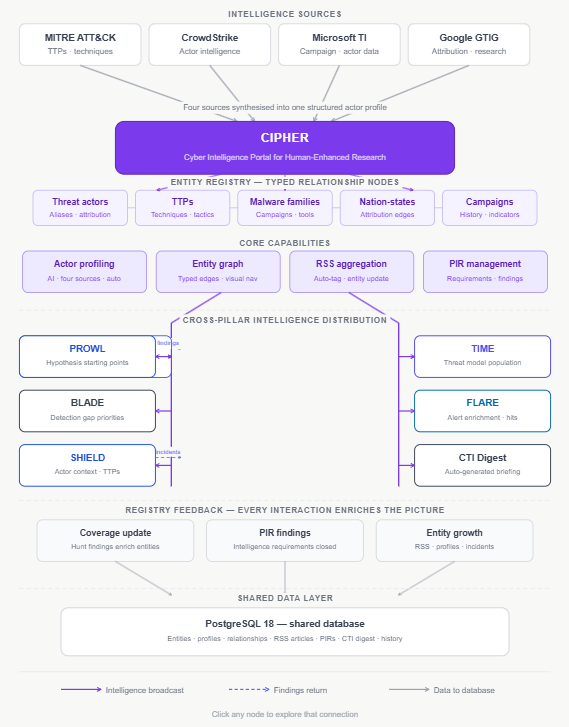
CIPHER addresses the structure. Not by producing better intelligence reports but by eliminating the distribution problem entirely. Every actor profile generated in CIPHER populates the entity registry automatically — feeding PROWL as hypothesis starting points, BLADE as detection engineering priorities, SHIELD as incident response context, TIME as threat model population, and FLARE as alert enrichment. The intelligence that was produced once now reaches every workflow that needs it, in the format each workflow can act on, without requiring anyone to manually distribute a report.
One registry. Every pillar informed. The intelligence the organization was producing finally reaching the decisions it was always supposed to inform.
A CLOSER LOOK
The Constellation Your Adversary Hoped You Would Never Draw
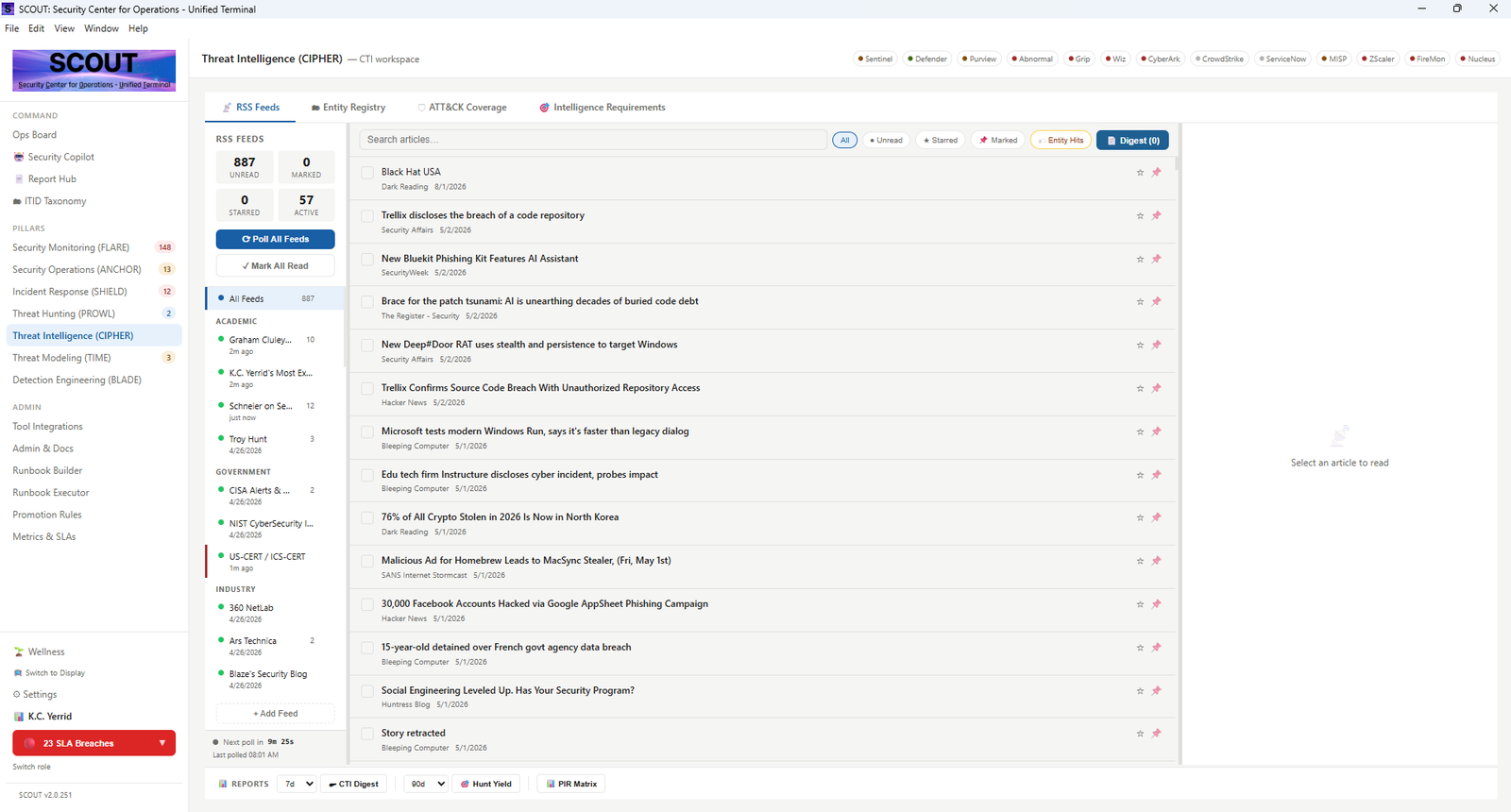
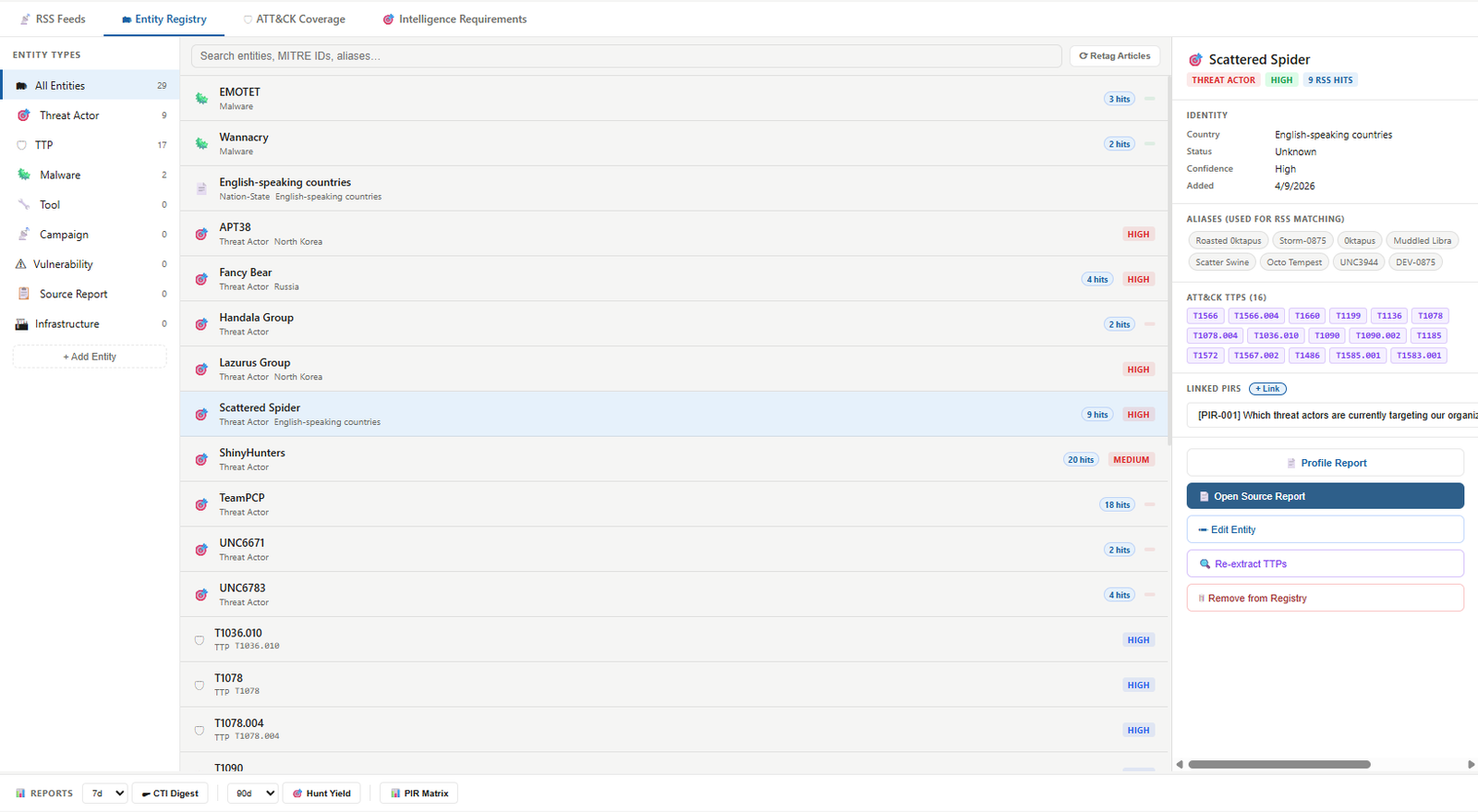
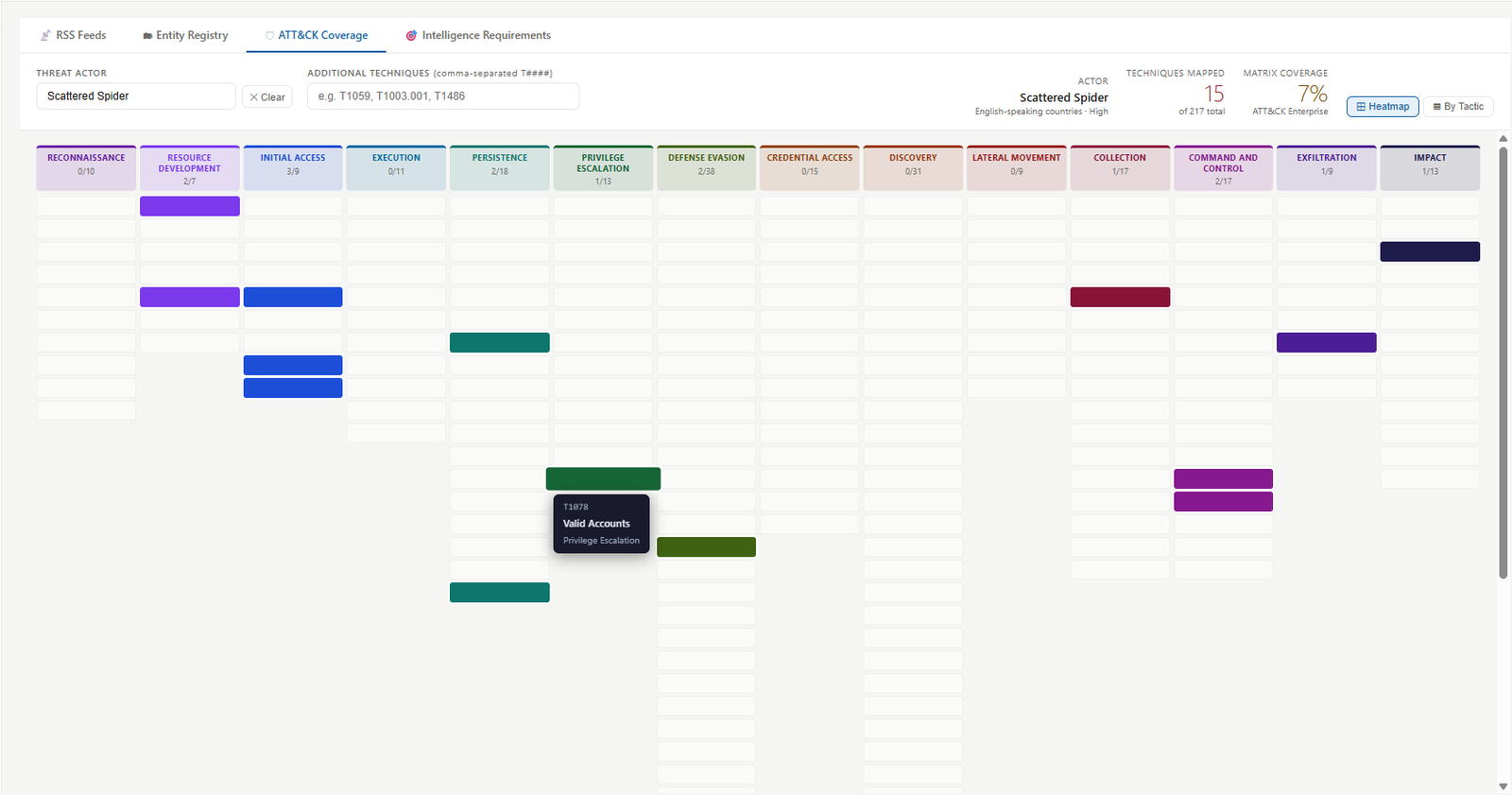
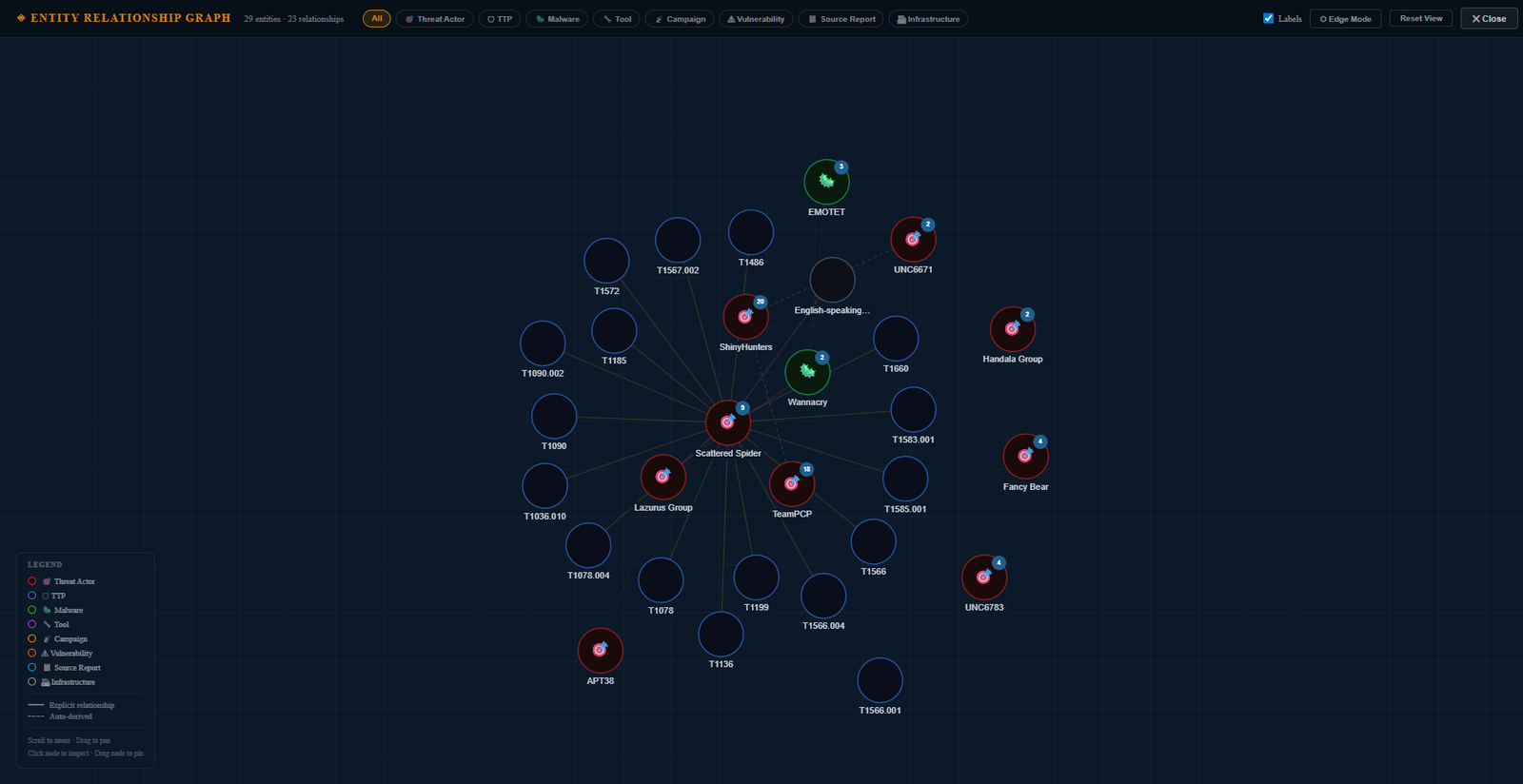
The threat actor targeting your organization has left a trail across the intelligence landscape — distributed across four authoritative sources that have never been synthesized into a single picture. Every screenshot here shows CIPHER doing exactly that — generating the complete actor profile from MITRE ATT&CK, CrowdStrike, Microsoft Threat Intelligence, and Google GTIG, connecting every TTP, malware family, and nation-state attribution into a typed entity relationship graph, and distributing the complete intelligence picture to every pillar in SCOUT the moment the profile is saved. This is what the constellation looks like when every star is finally connected.
CIPHER - CYBER INTELLIGENCE PORTAL FOR HUMAN-ENHANCED RESEARCH
The Threat Intelligence Platform That Actually Reaches the Workflows That Need It
AI-generated actor profiles. A live entity relationship graph. Automatic cross-pillar intelligence distribution — from the moment the profile is saved.
AI Actor Profiling
CIPHER synthesizes MITRE ATT&CK, CrowdStrike, Microsoft Threat Intelligence, and Google GTIG into a single structured actor profile — TTPs, malware families, campaign history, aliases, and nation-state attribution — populating the entity registry automatically on save.
Entity Relationship Graph
Every actor, TTP, malware family, nation-state, and campaign exists as a connected node in the CIPHER entity graph. Typed relationship edges link every element to every other element it relates to — rendering the complete intelligence picture in a single navigable view.
RSS Intelligence Aggregation
Every RSS feed configured in CIPHER is scanned continuously — every article processed against the entity registry, every article mentioning a registered entity automatically tagged and linked to that entity's live record. The intelligence picture stays current between formal profile generations.
Cross-Pillar Intelligence Distribution
Every actor profile saved in CIPHER feeds PROWL as hypothesis starting points, BLADE as detection engineering priorities, SHIELD as incident response context, TIME as threat model population, and FLARE as alert enrichment — automatically, through the shared entity registry every pillar reads in real time.
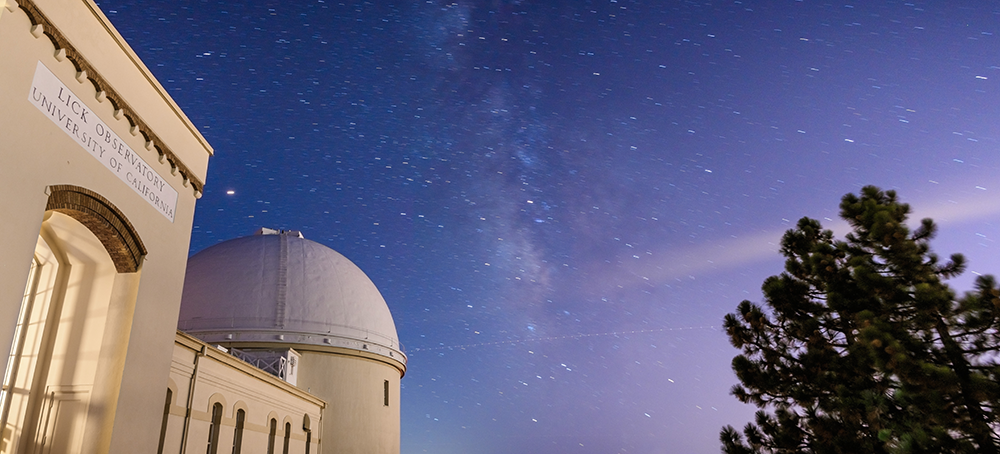
CIPHER reveals what the naked eye was never going to catch.
The Star That Was Always There

THE SAME INTELLIGENCE PICTURE
One entity registry. Seven pillars.
PILLAR FEATURES - PROBLEMS CIPHER SOLVES
Why Most Threat Intelligence Programs Underperform
The intelligence exists. The connection does not. Every problem below is the consequence of that gap.
The intelligence that arrived and went nowhere
The constellation nobody drew
The intelligence that never reached the hunt
VERIFIED REVIEWS
The Sky Is Already Mapped. Schedule a Consultation and Read It.
The threat actors targeting your organization have not operated in silence. They have left a trail across the intelligence landscape — in threat reports, attribution analyses, indicator feeds, and campaign documentation that has never been connected into the complete picture your SOC needs to hunt them, detect them, and respond to them with the precision that comes from understanding rather than reaction. A free CIPHER consultation shows you exactly what that picture looks like for your specific threat landscape — which actors are most relevant to your organization, which techniques in your detection program they are most likely to exploit, and what the entity relationship graph looks like when your threat landscape is fully mapped. Thirty minutes. The complete constellation. Your sky to navigate.

K.C. Yerrid
“When I designed CIPHER I started from a single observation — the gap between the intelligence that arrives in a SOC and the intelligence that actually reaches the workflows that need it is almost total in most organizations. The CTI analyst reads the report. The hunter never sees it. The detection engineer gets an indicator that has already aged out. The incident responder learns about the actor while they are already responding to an incident involving that actor.
The intelligence pipeline was broken at every handoff. Not because the intelligence was bad or the analysts were inattentive — but because there was no platform that took the intelligence as input and distributed it to the workflows that needed it as output, automatically, in the format each workflow could actually use.
CIPHER was designed to be that platform. The entity registry that every pillar reads. The profile that populates the hunting workspace and the detection queue and the incident workspace and the threat model simultaneously. The star map that every navigator in the SOC depends on — built once, updated continuously, and always current.
The stars were always there. Every actor that has ever targeted an organization in your sector is in the intelligence record somewhere. CIPHER connects them into the constellation that makes the intelligence picture readable — and then makes sure every pillar that needs to read it can.”
